What Gym Equipment to Add to Your Home Gym After Dumbbells
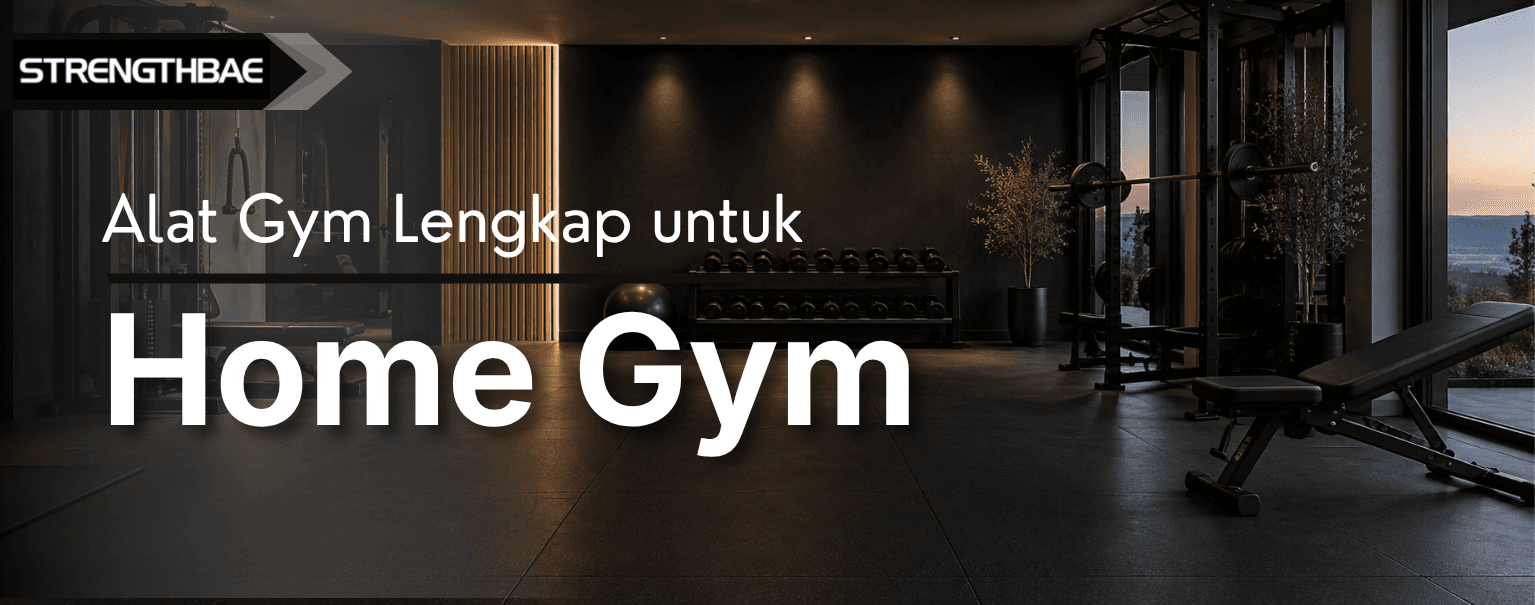
If you already own adjustable dumbbells, you already have a strong foundation for your home gym. The most logical and efficient order for adding equipment is an adjustable bench first, followed by a combination of a barbell, weight plates, and a rack, then a cable machine or pulley system, and finally leg isolation machines such as a leg extension and leg curl if your space and budget allow.
The main principle is to choose equipment that introduces new functional movement patterns or supports progressive overload beyond what dumbbells alone can provide.
Why Should You Follow a Specific Upgrade Order?
Building an ideal home gym is not about buying as much equipment as possible to fill the room. It is about choosing functions that are relevant to the way you actually train.
Gym equipment experts from Garage Gym Reviews emphasize that one of the biggest mistakes beginners make is purchasing expensive commercial-style training stations too early, even though those machines may have limited usefulness at the beginning of their fitness journey. By building your setup gradually, you can better understand your actual strength requirements, daily training intensity, and space needs while avoiding unnecessary purchases.
Every new piece of equipment should solve a specific limitation in your current training setup. Dumbbells, for example, are limited by gravity because resistance always pulls straight downward. Adding gym equipment in a structured order helps create a more complete strength training ecosystem at home.
Read also: Building a Home Gym from Scratch: Where to Start
Stage 1: Adjustable Bench
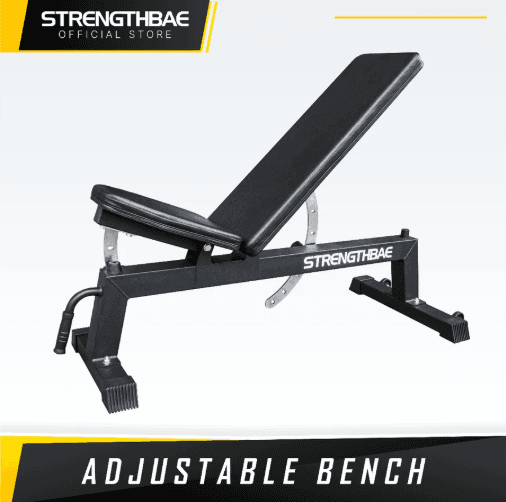
After adjustable dumbbells, the first piece of equipment you should strongly consider is an adjustable bench. Why? Because it immediately expands your available training positions and range of motion without taking up too much floor space.
The combination of adjustable dumbbells and a bench is already highly capable of supporting full-body training, including the chest, shoulders, back, arms, quadriceps, and glutes. Some exercises you can perform include:
Dumbbell Bench Press & Incline Press: Train the chest effectively from different incline angles.
Seated Shoulder Press: Provides stable back support for overhead pressing while helping you maintain a controlled spinal position.
Chest-Supported Row: Reduces body momentum during back training and places more focus on the lats and trapezius.
Bulgarian Split Squat & Step-Up: Provides a stable platform for unilateral leg training.
Hip Thrust: Creates a secure upper-back support position for training the glutes.
Should You Choose a Flat-Incline or FID (Flat-Incline-Decline) Bench?
If your main training focus includes pressing movements, rows, and lower-body isolation exercises, a Flat-Incline bench is usually sufficient.
However, if you want to include decline movements such as decline bench presses or decline sit-ups, an FID bench is the better option.
The most important factors to consider when choosing a bench are frame stability, maximum weight capacity, pad width, and the availability of transport wheels or handles to make the bench easier to move during daily training.
StrengthBae Premium Product Recommendations:
• Adjustable Bench 2.0 — Highly recommended for stable full-body training with an integrated leg holder.
• Adjustable Bench 1.0 — A compact commercial-grade option with quick backrest angle adjustments.
Stage 2: Barbell, Weight Plates, and Rack
As your consistency and strength improve, the maximum weight of your adjustable dumbbells may eventually become less challenging for heavy compound movements such as squats, Romanian deadlifts, barbell bench presses, and heavy hip thrusts.
This is where a barbell, weight plates, and a rack become the next major foundational upgrade for your home gym.
A barbell allows you to distribute weight evenly across both sides of the body, apply force symmetrically, and increase loading gradually to support progressive overload.
However, to make barbell training safer when training alone at home, you should also have a rack.
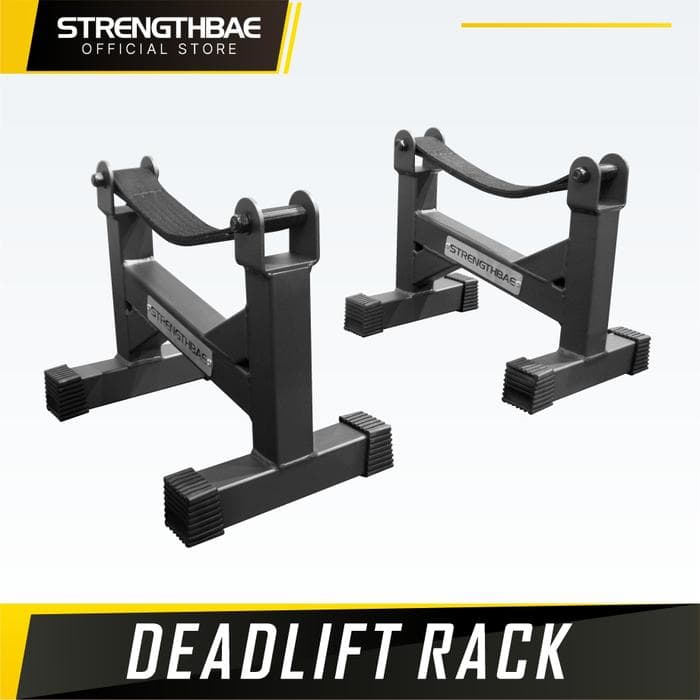
A rack acts as an important safety and setup tool. Without one, it can be difficult to position a loaded barbell on your upper back for a heavy back squat or safely set up a barbell bench press without assistance from a spotter.
The type of rack you choose should match your available space:
Squat Stand: The most space-efficient option, ideal for rooms with very limited space.
Half Rack & Folding Wall-Mount Rack: Provide high load capacity and plate storage while still using wall space efficiently.
Power Rack / Modular Cage: Offers excellent enclosed safety with safety pins or straps, making it suitable for solo training without a spotter.
Stage 3: Cable Machine & Pulley System
Once you have dumbbells, a bench, a barbell, and a rack, you already have most of the equipment required for free-weight strength training.
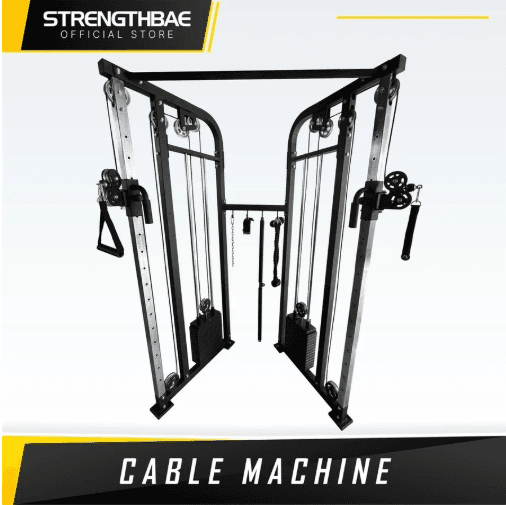
The main limitation of free weights is the direction of resistance: gravity always pulls vertically downward. A cable machine addresses this limitation through a pulley system.
With a cable machine, you can adjust resistance from different directions, including above, below, in front of, behind, or beside the body.
This flexibility also allows cables to maintain relatively consistent tension through different parts of an exercise, which can be difficult to achieve with conventional free weights.
Some isolation and functional exercises that work especially well with cable systems include:
Lat Pulldown & Cable Rows: Train the back through both vertical and horizontal pulling patterns.
Triceps Pushdown & Biceps Curls: Isolate the arms while allowing you to adjust pulley angles.
Cable Flyes & Lateral Raises: Maintain tension on the chest and lateral deltoids throughout the movement.
Face Pulls & Rotational Core Exercises: Train the rear shoulder area and rotational core strength.
StrengthBae Premium Product Recommendation:
• Compact Cable Crossover — A highly space-efficient dual-pulley solution with adjustable pulley height for home use.
Stage 4 (Optional): Machines for Leg Training
Once your free-weight and cable training foundation is complete, your setup can already support a very wide range of strength exercises.
However, there may still be one remaining gap: single-joint isolation exercises for the quadriceps and hamstrings without placing as much axial load on the spine.
Compound exercises such as barbell squats are excellent for overall strength, but they can also create significant systemic fatigue and axial loading on the back.
Leg extension and leg curl machines allow you to isolate movements around the knee joint:
Leg Extension: Isolates the quadriceps through knee extension.
Leg Curl (Seated/Lying): Isolates the hamstrings through knee flexion.
StrengthBae Premium Product Recommendations:
• Compact Leg Extension & Leg Curl — A dual-function plate-loaded machine that combines leg extensions and leg curls in one compact unit.
• Leg Extension Leg Curl Attachment — A more economical attachment that can be installed directly on your Adjustable Bench 2.0.
Home Gym Equipment Upgrade Priority Matrix
To help you plan your budget and available home gym space, here is a summary of the recommended upgrade order after purchasing adjustable dumbbells:
Priority | Equipment | New Training Options | Best Time to Buy |
|---|---|---|---|
Priority 1 | Adjustable Bench (Bench 1.0 / 2.0) | Incline/decline chest presses, supported shoulder presses, Bulgarian split squats, chest-supported rows | When you need more bench angles and exercise variations for your dumbbells |
Priority 2 | Barbell, Plates, and Rack (Squat Stand / Power Rack) | Heavy back squats, deadlifts, barbell bench presses, progressive barbell hip thrusts | When the maximum weight of your dumbbells starts limiting heavy compound exercises |
Priority 3 | Cable Machine (Pulley / Crossover) | Vertical lat pulldowns, triceps pushdowns, cable flyes, face pulls, rotational exercises | When you want constant tension and more resistance directions |
Priority 4 | Leg Machine (Leg Extension / Curl) | Quadriceps isolation through knee extension and hamstring isolation through knee flexion | When your free-weight foundation is complete and you want more focused leg isolation work |
Keys to a Successful Home Gym Setup: Space, Safety, and Flooring
Before ordering heavy commercial-grade equipment for your home, there are several important non-equipment factors to evaluate for both usability and property safety:
Ceiling Height: According to guidance from Garage Gym Reviews, a minimum ceiling height of around 92 inches, or approximately 2.3 meters, is commonly recommended. This provides enough room for movements such as overhead shoulder presses, pull-ups, and high-pulley exercises without hitting the ceiling.
Floor Protection (Rubber Flooring): Avoid dropping heavy dumbbells or iron weight plates directly onto tile or marble flooring without protection. Concentrated impact from heavy weights can damage or crack the floor surface.
Recommended Rubber Flooring: Dedicated interlocking rubber tiles or rolled rubber flooring with a thickness of around 8 mm to 10 mm can provide useful protection. Quality rubber flooring helps absorb impact and vibration, protects the underlying concrete surface, and reduces noise inside the home.
FAQ
After buying adjustable dumbbells, what equipment should I buy next?
An Adjustable Bench, such as the Adjustable Bench 1.0 or 2.0, is highly recommended as the next purchase. It immediately expands the number of pressing angles, supported back exercises, and unilateral leg exercises you can perform without requiring much additional space.
Should I prioritize buying a bench or a barbell first?
A bench should usually come first because it significantly increases the usefulness of the dumbbells you already own.
A barbell becomes more important when the maximum weight of your dumbbells starts limiting your progress in heavy leg, hip, or back exercises.
When is the best time to buy a cable machine?
Consider buying a cable machine when you want more resistance directions than dumbbells and barbells can provide.
A pulley system is especially useful for isolation exercises such as lat pulldowns, triceps pushdowns, biceps curls, and cable crossovers.
Are leg extension and leg curl machines essential for a home gym?
No. They are not essential during the early stages of building a home gym.
These machines are better considered as optional later-stage upgrades for users who want to isolate the quadriceps and hamstrings more directly without placing as much load on the lower back.
Build Your Ideal Home Gym Setup with StrengthBae
Are you planning to build your ideal home gym in the garage, or looking for the next piece of equipment to add after dumbbells?
Avoid wasting your budget and available space on equipment that does not match your training needs. Contact the StrengthBae Product Specialist team via WhatsApp for a consultation, recommendations based on your room and ceiling dimensions, and suitable home gym package options with official warranty coverage.
StrengthBae is a professional gym equipment brand that provides solutions for commercial gyms, personal training facilities, and home gyms. From racks and All-in-One Trainers to functional training accessories such as Hyrox sandbags, a wide range of gym equipment is available at Strengthbae.